
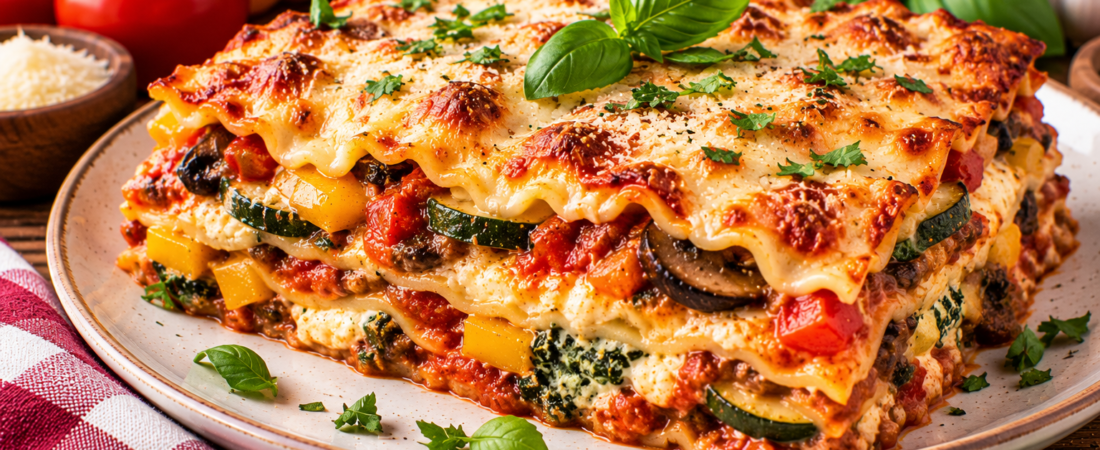
This vegetable lasagna has layers of pasta, roasted vegetables, tomato sauce, ricotta, mozzarella, and Parmesan. Let it rest before slicing so the layers hold together.
Thank you for reading this post, don’t forget to subscribe!Ingredients
- 12 lasagna sheets
- 2 tablespoons olive oil
- 1 zucchini, diced
- 1 red bell pepper, diced
- 8 ounces (225 g) mushrooms, sliced
- 5 ounces (140 g) fresh spinach
- 3 cups (720 ml) marinara sauce
- 15 ounces (425 g) ricotta cheese
- 1 large egg
- 2 cups (200 g) shredded mozzarella
- 1/2 cup (50 g) grated Parmesan
- 1 teaspoon Italian seasoning
- 1/2 teaspoon salt and 1/4 teaspoon black pepper
Instructions
- Heat the oven to 375°F (190°C). Grease a 9-by-13-inch (23-by-33-cm) baking dish.
- Cook the lasagna sheets according to the package directions. Drain and lay flat.
- Heat the oil in a skillet. Cook the zucchini, pepper, and mushrooms for 8–10 minutes. Add the spinach and cook until wilted. Season.
- Mix the ricotta with the egg, Italian seasoning, salt, and pepper.
- Spread a little sauce in the dish. Layer noodles, ricotta, vegetables, sauce, mozzarella, and Parmesan. Repeat, finishing with sauce and cheese.
- Cover with foil and bake for 30 minutes. Uncover and bake for 15–20 minutes until bubbling and golden.
- Rest for 15 minutes before slicing.
Recipe Details
Prep: 30 minutes · Cook: 50 minutes · Total: 1 hour 20 minutes · Serves: 8
Storage
Refrigerate for up to 4 days or freeze portions for up to 3 months. Reheat until hot throughout.
The Story Behind This Recipe
Vegetable lasagna is a useful way to layer different textures into one make-ahead meal. The vegetables bring moisture and flavour, ricotta adds a creamy centre, and the pasta gives the dish structure. Letting the lasagna rest after baking is not optional: it allows the sauce and cheese to settle so the layers are easier to serve.
Lasagna has roots in the layered pasta traditions of Italy, with regional versions using different shapes, sauces, cheeses and fillings. This vegetable version is a modern home-cooking adaptation rather than a dish with one named inventor. It reflects the broader history of lasagna as a flexible family meal: seasonal vegetables can replace meat, while tomato sauce, ricotta and baked pasta preserve the familiar Italian structure.