
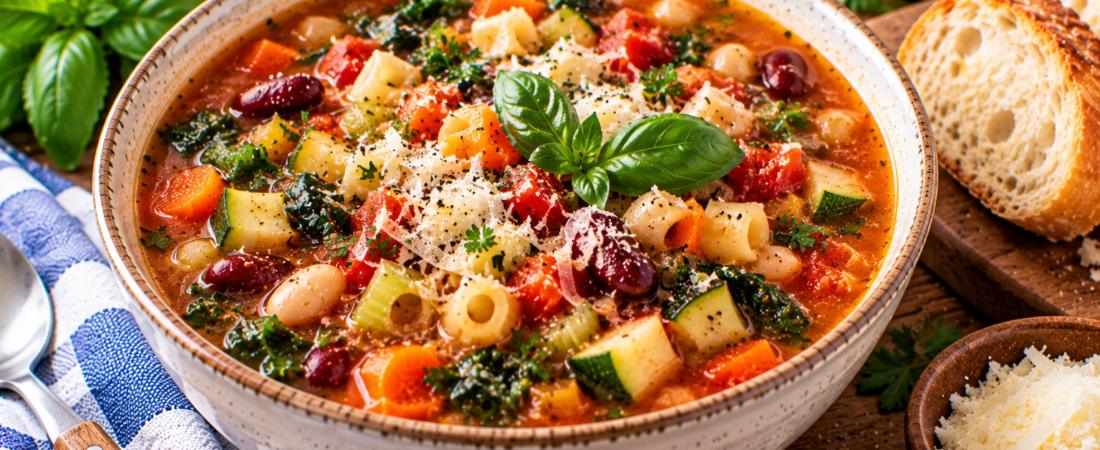
This classic minestrone is a hearty Italian vegetable soup with beans, tomatoes, pasta, and herbs. Use seasonal vegetables and adjust the pasta or stock to your preference.
Thank you for reading this post, don’t forget to subscribe!Ingredients
- 2 tablespoons olive oil
- 1 medium onion, diced
- 2 carrots, diced
- 2 celery stalks, diced
- 2 zucchini, diced
- 3 garlic cloves, minced
- 1 can (14 oz / 400 g) diced tomatoes
- 1 can (15 oz / 425 g) cannellini beans, drained and rinsed
- 6 cups (1.4 L) vegetable stock
- 1 teaspoon dried Italian herbs
- 1 cup (100 g) small pasta
- 1 teaspoon salt and 1/2 teaspoon black pepper
- Chopped parsley and grated Parmesan, to serve
Instructions
- Heat the olive oil in a large pot. Cook the onion, carrots, and celery for 6–8 minutes.
- Add the zucchini and garlic and cook for 2 minutes.
- Stir in the tomatoes, beans, stock, herbs, salt, and pepper. Bring to a boil.
- Reduce the heat and simmer for 15 minutes.
- Add the pasta and cook until tender, following the package timing. Add a little stock if the soup becomes too thick.
- Serve with parsley and Parmesan.
Recipe Details
Prep: 15 minutes · Cook: 35 minutes · Total: 50 minutes · Serves: 6
Storage
Refrigerate for up to 4 days. Store pasta separately if you want it to stay firm. Freeze without the pasta for up to 3 months.
The Story Behind This Recipe
Minestrone is a flexible Italian soup rather than one fixed formula. Its name is linked to the idea of a large, substantial soup, and the ingredients traditionally change with the season and what is available in the kitchen. Beans make the soup more filling, while pasta turns a light vegetable broth into a complete meal. Keeping the vegetables slightly varied from batch to batch is part of the dish’s practical character.
Because minestrone developed as a household and regional dish, it is difficult to assign it to one inventor or single town. Italian cooks have long used the soup as a way to combine vegetables, legumes, grains or pasta into a nourishing pot. The modern version reflects that history: there is no single mandatory ingredient, and the best bowl often depends on the season. Parmesan and herbs add a final layer of regional Italian flavour without taking away the soup’s everyday, economical character.