
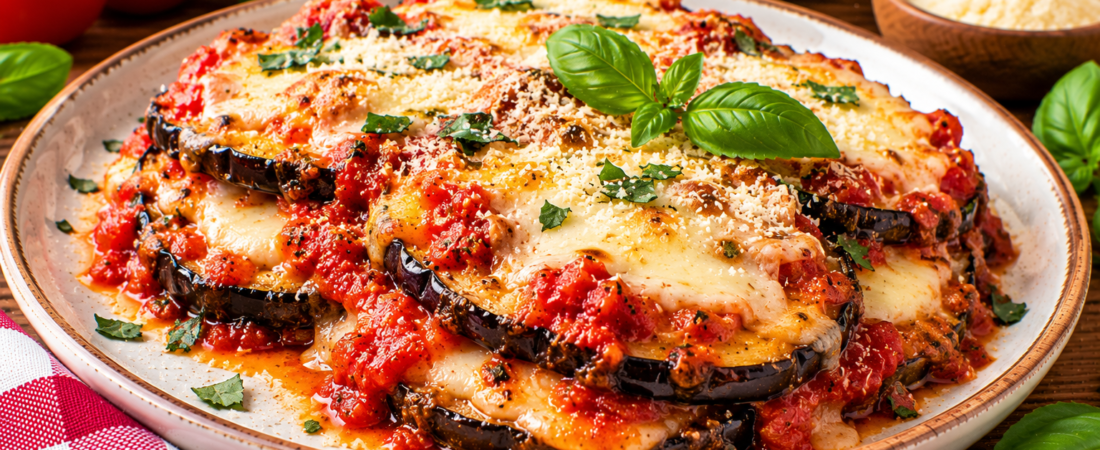
This classic Eggplant Parmesan has tender roasted eggplant layered with rich tomato sauce, Parmesan and melted mozzarella. Baking instead of deep-frying keeps the dish lighter while preserving its crisp, savoury coating.
Thank you for reading this post, don’t forget to subscribe!Ingredients
- 2 large eggplants, about 2 lb (900 g) total
- 1 1/2 tsp fine salt, plus more for seasoning
- 1 cup (125 g) all-purpose flour
- 3 large eggs, beaten
- 1 1/2 cups (150 g) Italian-seasoned breadcrumbs
- 1/2 cup (50 g) finely grated Parmesan, plus 1/2 cup for layering
- 3 cups (720 ml) marinara or tomato pasta sauce
- 2 cups (200 g) shredded mozzarella
- 1/4 cup (60 ml) olive oil, for brushing
- 1/4 cup chopped fresh basil, optional
Instructions
- Slice the eggplants into 1/2-inch (1.25 cm) rounds. Arrange them in a single layer, sprinkle lightly with salt and let them stand for 20–30 minutes. Pat away the released moisture.
- Preheat the oven to 425°F (220°C). Line two baking sheets with parchment paper and lightly brush them with olive oil.
- Set up three shallow bowls: one with the flour, one with the beaten eggs and one with the breadcrumbs mixed with 1/2 cup of Parmesan.
- Coat each eggplant slice in flour, then egg, then breadcrumbs. Arrange the slices on the prepared baking sheets and brush or spray the tops lightly with olive oil.
- Bake for 20–25 minutes, turning halfway through, until the coating is golden and the eggplant is tender.
- Reduce the oven temperature to 375°F (190°C). Spread a thin layer of marinara in a 9 x 13-inch (23 x 33 cm) baking dish.
- Add a layer of breaded eggplant, followed by marinara, some of the remaining Parmesan and mozzarella. Repeat the layers, finishing with sauce, mozzarella and Parmesan.
- Bake uncovered for 25–30 minutes, until the sauce is bubbling and the cheese is melted and lightly golden.
- Rest for 10–15 minutes before serving. Garnish with fresh basil if desired.
Cooking Tips
- The original draft was missing the type and quantity of tomato sauce. The corrected recipe uses 3 cups of marinara for a properly saucy dish.
- Use firm eggplants and slice them evenly so they roast at the same rate.
- Do not soak the eggplant in excessive oil. A light coating is enough for browning and keeps the finished dish from becoming greasy.
- Let the baked dish rest before cutting so the layers hold together.
- For an even lighter version, roast the eggplant without breading and layer it with the sauce and cheese.
Storage & Reheating
Refrigerate leftovers in a covered container within 2 hours and use them within 3–4 days. Reheat portions in a 350°F (175°C) oven until hot and bubbling. Freeze cooled portions for up to 3 months, then thaw overnight in the refrigerator before reheating.
Recipe Details
Prep: 35 minutes · Cook: 55 minutes · Total: 1 hour 30 minutes · Serves: 6
Frequently Asked Questions
Can I fry the eggplant instead?
Yes. Shallow-fry the breaded slices in a thin layer of oil until golden on both sides, then drain them on a rack or paper towels before assembling.
Can I prepare Eggplant Parmesan ahead?
Yes. Assemble the dish, cover it and refrigerate it for up to 24 hours. Bake until hot in the centre, adding extra time if it is cold from the refrigerator.
Why is my Eggplant Parmesan watery?
The eggplant may have released excess moisture, or the sauce may be too thin. Salt and pat the slices dry, use a thick marinara and allow the baked dish to rest before serving.
The Story Behind This Recipe
Melanzane alla parmigiana is an Italian baked eggplant dish with regional variations. The Italian-American version often features breaded eggplant, tomato sauce and generous layers of melted cheese.
Despite the name, the dish is not generally considered to have originated in Parma. Food historians usually connect its development to southern Italian regions such as Sicily and Campania, where eggplant, tomato and local cheeses became central to home cooking. The exact inventor is unknown, and the name may refer to the way the eggplant is layered or prepared rather than to Parmesan cheese alone. Italian-American cooks later made the dish more substantial with breading and mozzarella, creating the familiar restaurant-style version.