
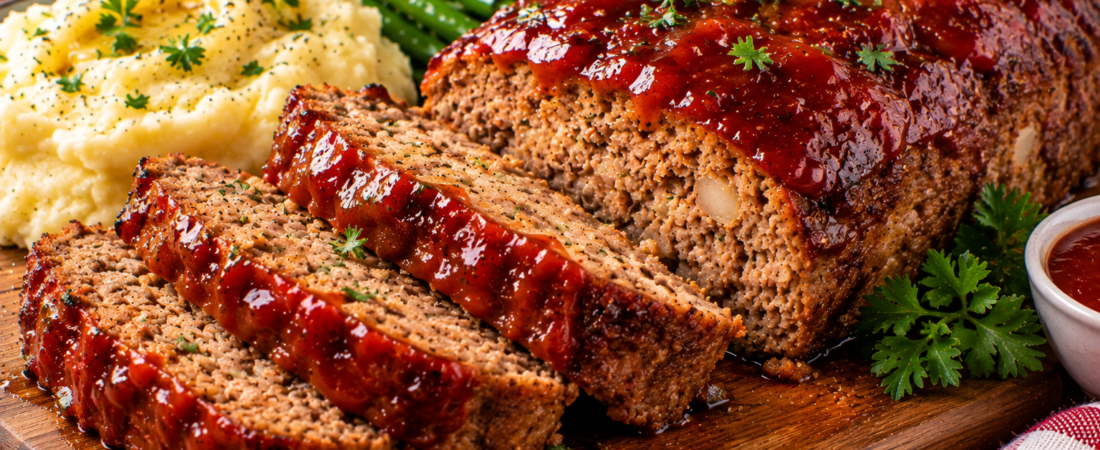
This classic Meatloaf is tender, savoury and topped with a tangy tomato glaze. A mixture of beef, breadcrumbs, milk and aromatics keeps it moist while it bakes into a comforting family dinner.
Thank you for reading this post, don’t forget to subscribe!Ingredients
For the Meatloaf
- 1 1/2 lb (680 g) ground beef, preferably 80–85% lean
- 1 cup (110 g) plain breadcrumbs
- 1/2 cup (120 ml) milk
- 1 large egg
- 1 medium onion, finely diced
- 2 cloves garlic, minced
- 1 tbsp Worcestershire sauce
- 1 tsp fine salt
- 1/2 tsp freshly ground black pepper
- 1 tsp dried Italian seasoning, optional
For the Glaze
- 1/2 cup (120 g) ketchup
- 2 tbsp packed brown sugar
- 1 tbsp Dijon mustard
- 1 tbsp apple cider vinegar, optional
Instructions
- Preheat the oven to 350°F (175°C). Line a baking sheet with parchment paper or lightly grease a loaf pan.
- In a small bowl, combine the breadcrumbs and milk. Let them stand for 5 minutes so the breadcrumbs soften.
- In a large bowl, whisk the egg, Worcestershire sauce, salt, pepper and Italian seasoning. Add the soaked breadcrumbs, onion and garlic.
- Add the ground beef and mix gently with your hands or a fork just until combined. Do not overmix, or the meatloaf can become dense.
- Shape the mixture into a loaf about 8 x 4 inches (20 x 10 cm) on the prepared baking sheet, or pack it lightly into the loaf pan.
- For the glaze, stir together the ketchup, brown sugar, Dijon mustard and vinegar if using. Spread about half over the top of the meatloaf.
- Bake for 50–65 minutes, brushing with the remaining glaze during the final 15 minutes, until the centre reaches 160°F (71°C).
- Rest the meatloaf for 10–15 minutes before slicing. Serve warm.
Cooking Tips
- The original recipe did not specify breadcrumbs or ketchup amounts. The corrected quantities provide a moist loaf and enough glaze for the top.
- Soak the breadcrumbs in milk before mixing. This helps retain moisture without making the meatloaf tough.
- Mix gently and avoid compacting the meat too firmly.
- Use an instant-read thermometer to confirm that the centre reaches 160°F (71°C) for ground beef.
- Resting is important because it allows the juices to redistribute and makes cleaner slices.
Storage & Reheating
Refrigerate leftovers in a covered container within 2 hours and use them within 3–4 days. Reheat slices in a skillet, microwave or 325°F (165°C) oven until hot throughout. Slices can be frozen for up to 3 months.
Make-Ahead Instructions
Shape the uncooked meatloaf, cover it and refrigerate it for up to 24 hours. Add the glaze just before baking and allow a little extra cooking time if the meat is very cold.
Recipe Details
Prep: 20 minutes · Cook: 60 minutes · Rest: 10 minutes · Total: 1 hour 30 minutes · Serves: 6
Frequently Asked Questions
Can I use ground turkey?
Yes. Ground turkey can be used, but it is leaner. Add a little extra milk or use a mixture of dark and light meat to help keep the loaf moist, and cook it to 165°F (74°C).
Why did my meatloaf fall apart?
It may not have had enough binder, it may have been sliced too soon or the mixture may not have been combined evenly. The egg and soaked breadcrumbs help it hold together, while resting helps it set.
Can I add vegetables?
Yes. Finely diced and softened carrots, celery, mushrooms or bell pepper can be added. Cook watery vegetables first so they do not release excess moisture into the loaf.
The Story Behind This Recipe
Meatloaf became a practical home-cooking staple in North America, where ground meat and pantry ingredients make a filling family meal. Tomato-based glazes are among the most familiar ways to finish the dish.
Although meatloaf has older European relatives, its modern American form grew with the availability of affordable ground meat, packaged breadcrumbs and home ovens. It has no single confirmed inventor; families adapted it to stretch meat and use leftover bread, onions and seasonings. The ketchup glaze reflects twentieth-century American pantry cooking, adding sweetness and acidity to a dish valued for its practicality as much as its comfort.