
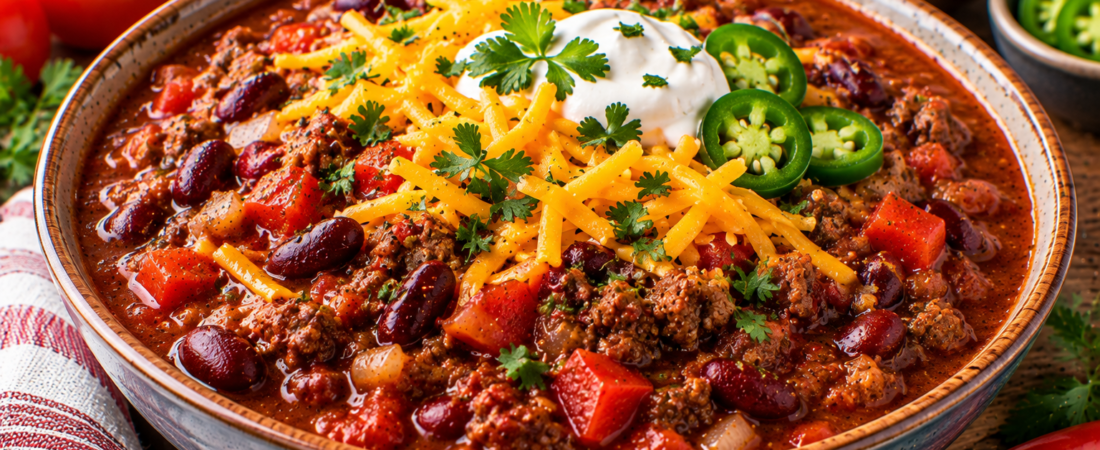
This classic beef chili is a hearty one-pot meal with ground beef, beans, tomatoes, peppers, and warming spices. Simmer it long enough for the sauce to thicken.
Thank you for reading this post, don’t forget to subscribe!Ingredients
- 2 tablespoons olive oil
- 1 medium onion, diced
- 1 bell pepper, diced
- 4 garlic cloves, minced
- 2 pounds (900 g) ground beef
- 2 tablespoons tomato paste
- 2 cans (14 oz / 400 g each) diced tomatoes
- 2 cans (15 oz / 425 g each) kidney or pinto beans, drained and rinsed
- 2 cups (480 ml) beef stock
- 2 tablespoons chili powder
- 1 tablespoon ground cumin
- 1 teaspoon smoked paprika
- 1 teaspoon salt and 1/2 teaspoon black pepper
Instructions
- Heat the oil in a large pot. Cook the onion and pepper for 6 minutes.
- Add the garlic and beef. Cook until the beef is browned, breaking it into small pieces.
- Stir in the tomato paste, chili powder, cumin, and paprika and cook for 1 minute.
- Add the tomatoes, beans, stock, salt, and pepper. Bring to a boil.
- Reduce the heat and simmer uncovered for 45–60 minutes, stirring occasionally, until thick.
- Taste and adjust the seasoning. Serve with cheese, sour cream, avocado, or cilantro.
Recipe Details
Prep: 15 minutes · Cook: 1 hour · Total: 1 hour 15 minutes · Serves: 8
Storage
Refrigerate for up to 4 days or freeze for up to 3 months. Reheat until steaming hot.
The Story Behind This Recipe
Chili is a dish that benefits from time: browning the beef creates savoury flavour, while a long simmer allows the spices and tomatoes to become a cohesive sauce. Beans make the pot more filling and stretch the meat, which is one reason chili works well for gatherings. Toppings can then make each bowl different, from cool sour cream to sharp cheese or fresh cilantro.
The exact origin of chili con carne is debated, and no single inventor can be confirmed. The dish developed through the meeting of Mexican, Texan and wider American cooking traditions, with cooks adapting meat, chillies, beans and tomatoes to local tastes. What became known as Texas-style chili often omits beans, while many home-style versions include them for extra substance. That regional flexibility is part of chili’s history and enduring appeal.